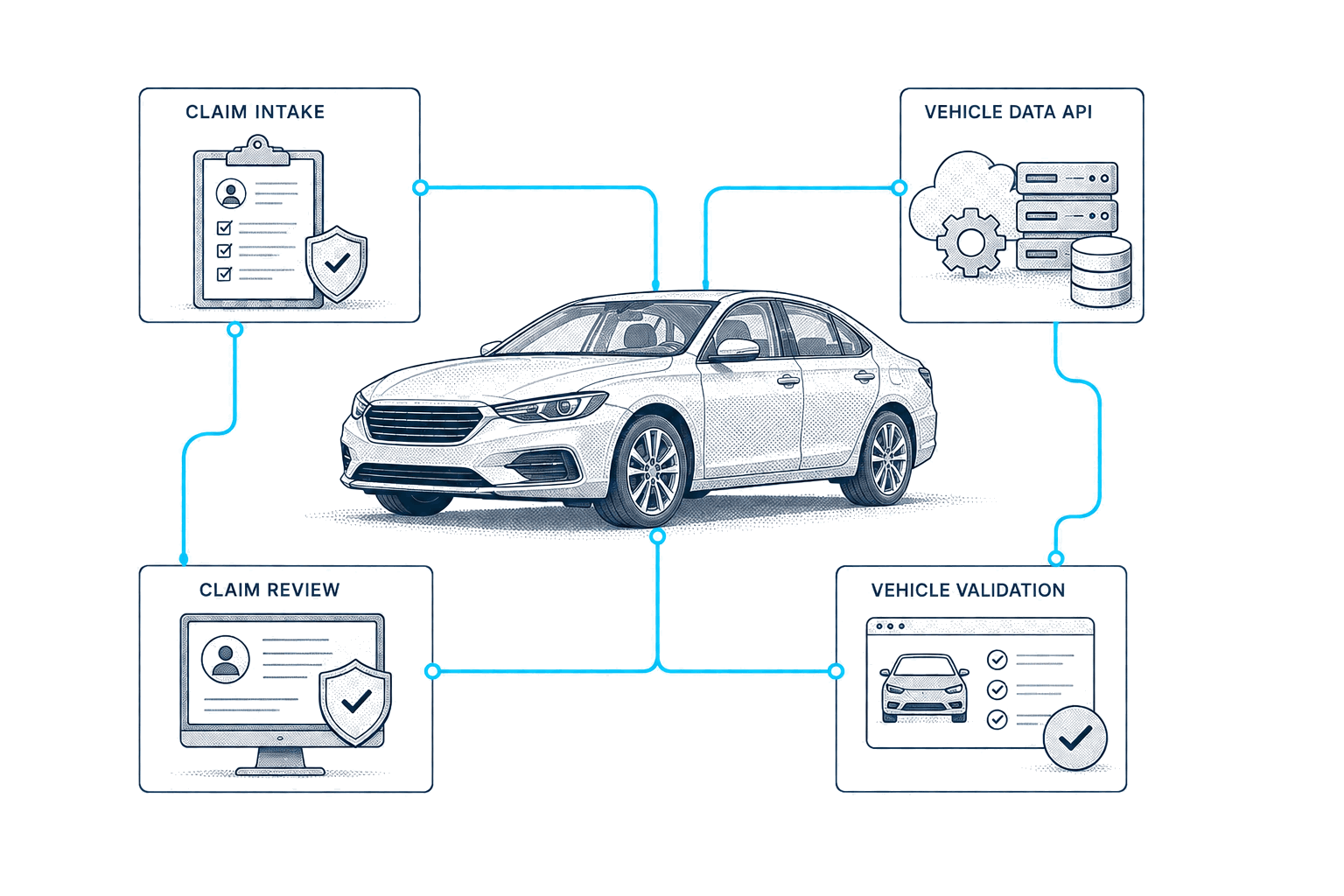
For warranty programs and platforms
Eligibility and claims start with the VIN
Open recalls the maker already covers, title brands and odometer readings that decide eligibility, and market values that cap what a claim can pay.
- Show the recalls the maker fixes free
- Verify mileage against title records
- Screen out salvage and flood titles
Pay only for successful API calls · Free sandbox
Scale and reliability
Running in production today
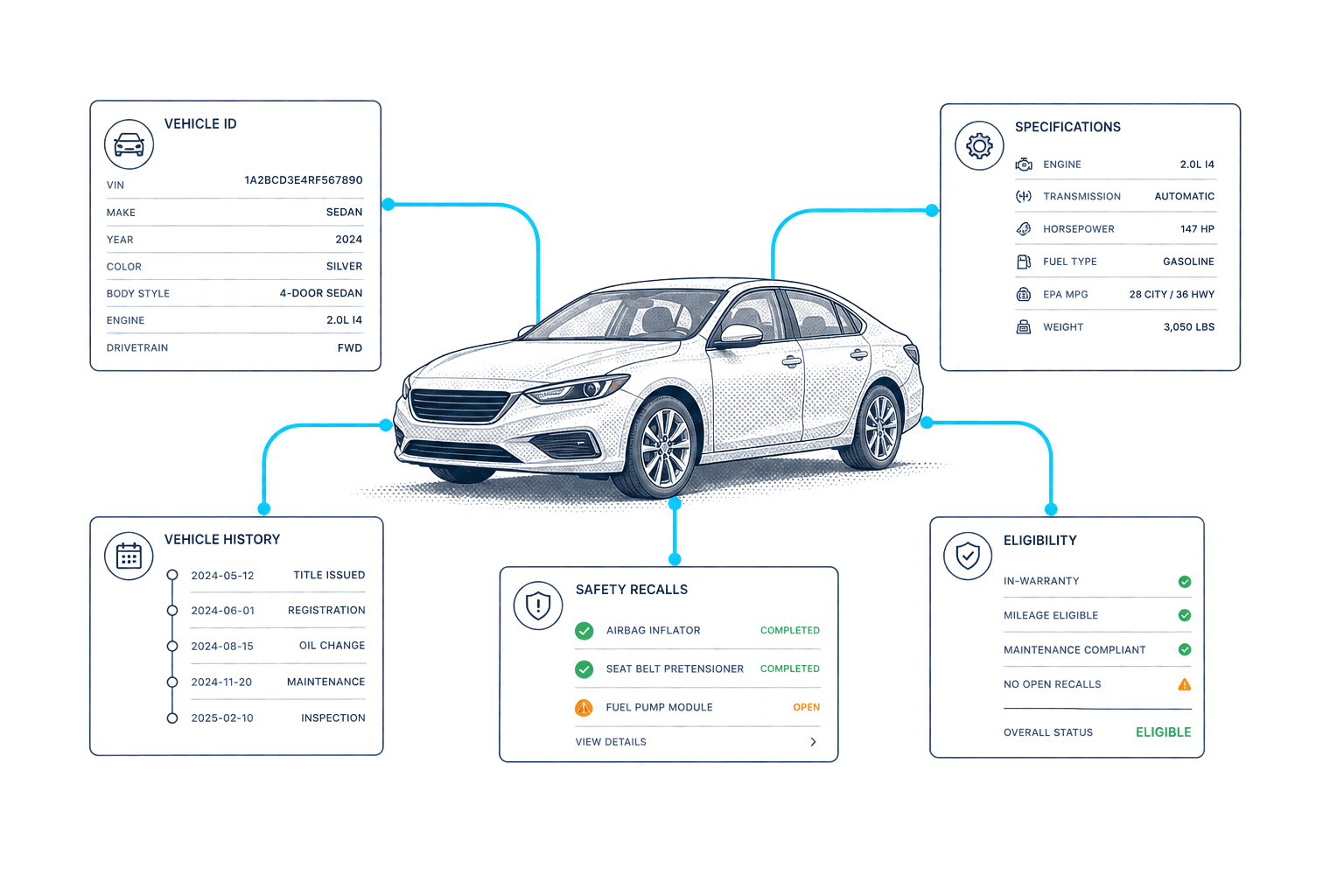
A warranty platform uses recall data to show customers what is open.
- 99.9%
- API uptime
- 275M+
- Vehicle records
- 500M+
- API calls per month
- 50+
- Countries covered
Platform reliability
Coverage depth
Proven at scale
Plate and VIN lookups
Use cases
Eligibility, claims and payouts
Administrators, F&I providers and warranty platforms make the same three decisions.
Recall transparency
Show contract holders the open recalls on their vehicle, which the maker fixes free.
Eligibility screening
Reject salvage, flood and junk titles at quote instead of finding them at claim.
Mileage verification
Every title record carries an odometer reading, so a mileage limit can be checked.
Capabilities
Signals that decide a claim
Four endpoints cover covered repairs, title condition, mileage and current value.
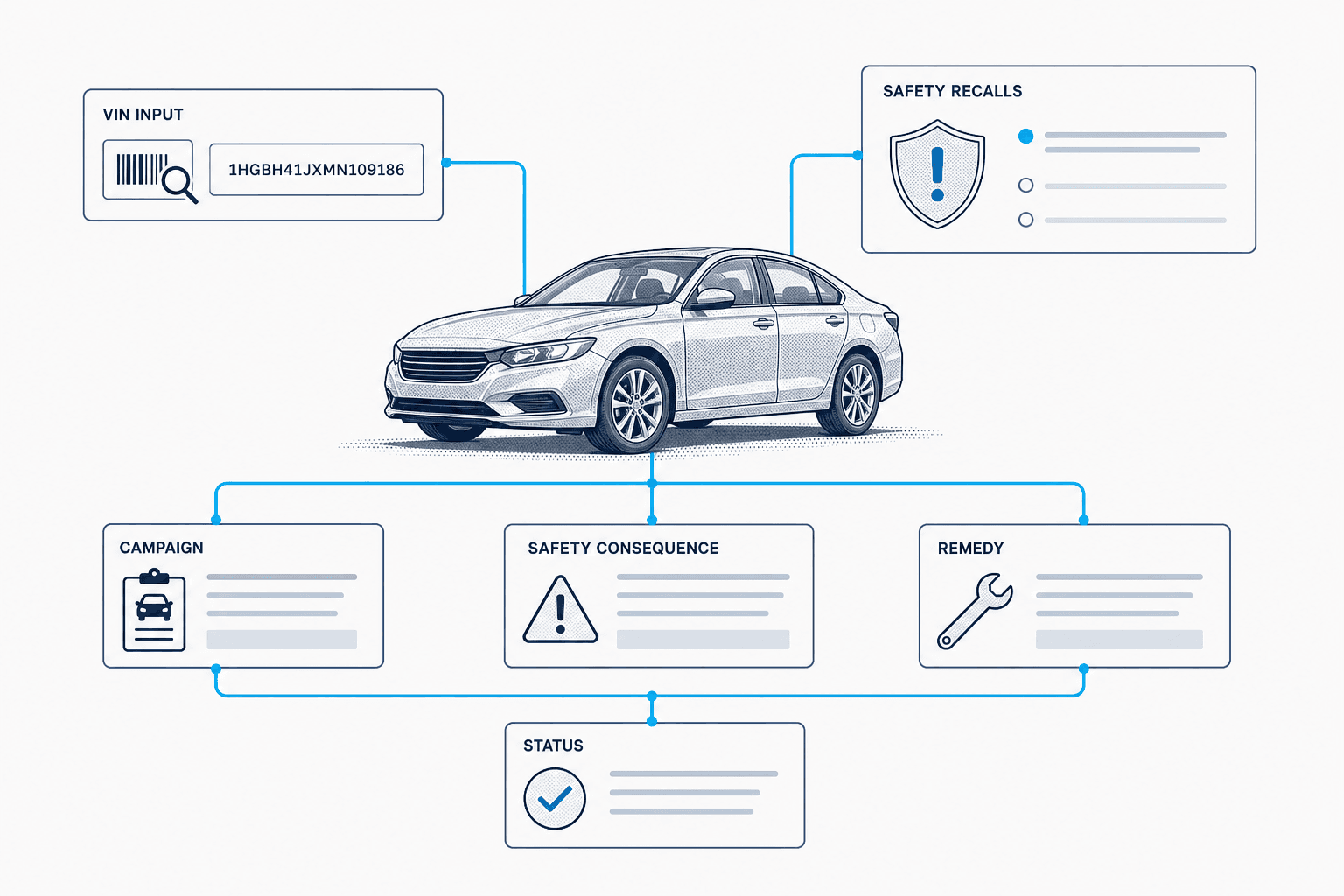
Open recall records
The component and the remedy, by VIN or by year and model. The maker pays for these.
Brands that void cover
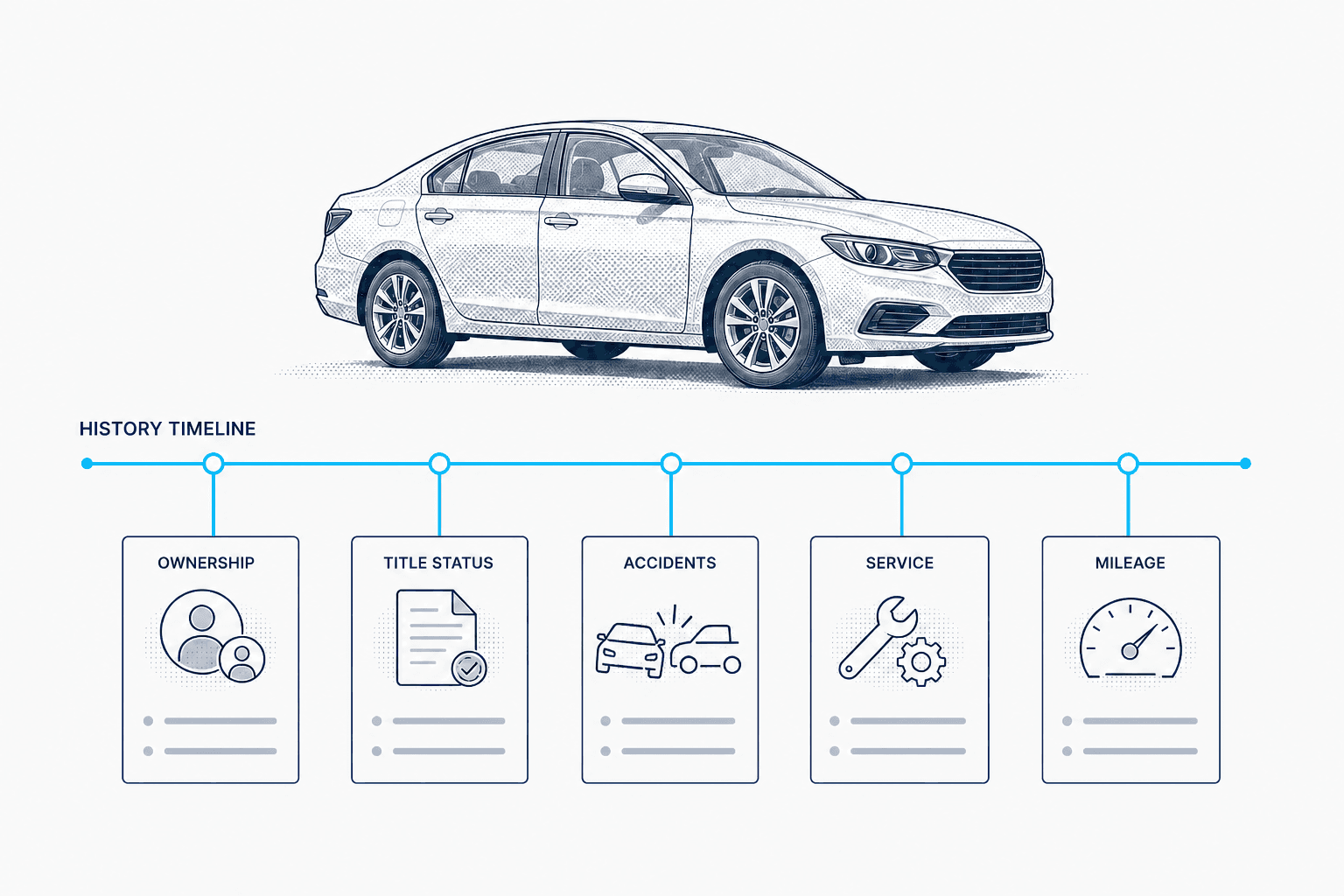
Flood and collision brands with date and location, plus junk and salvage records.
Odometer trail
A reading from each title event, so a rollback shows as a number going down.
Current market value
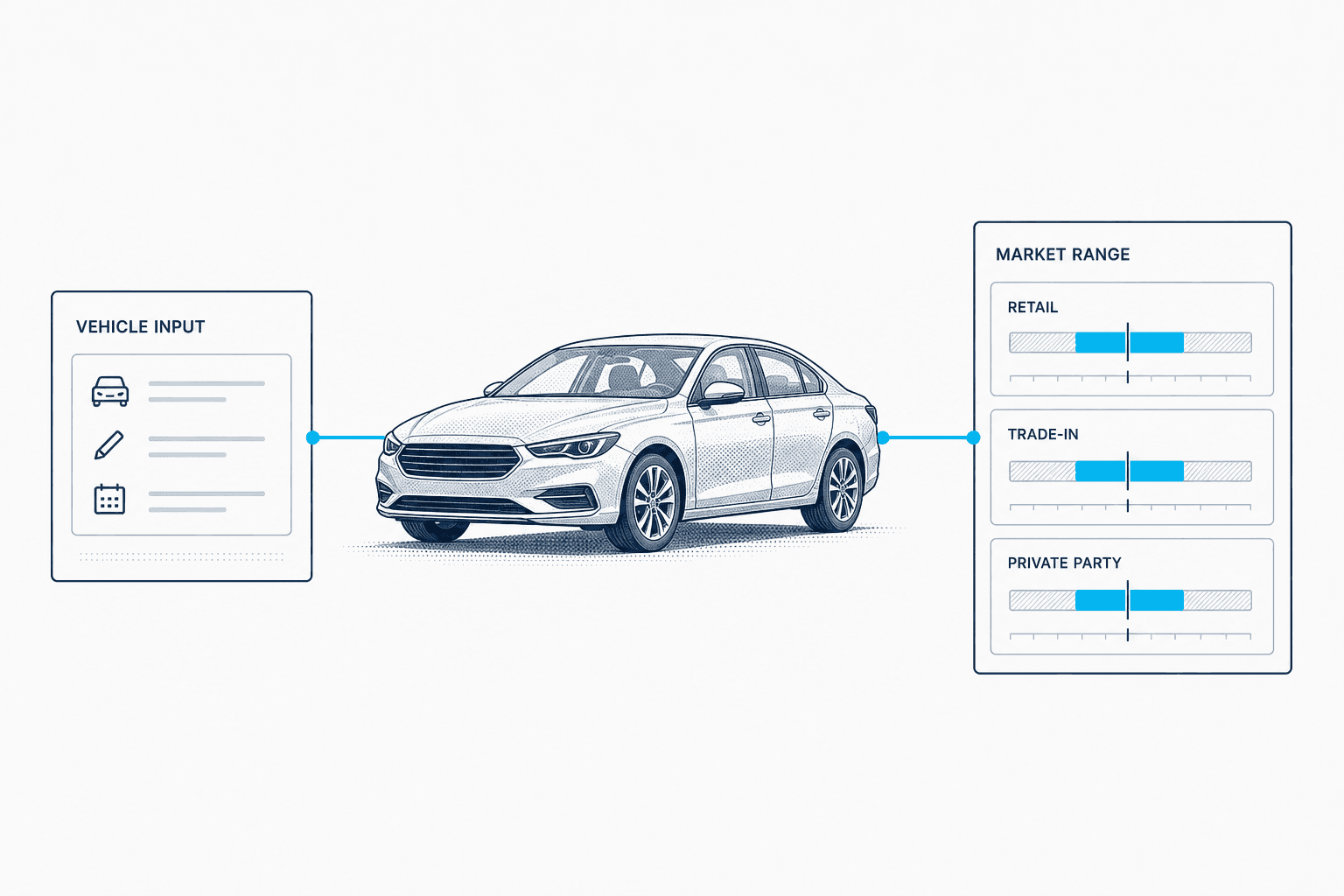
Retail and trade-in values for the VIN, adjusted for mileage, at claim time.
Enterprise
Administrators and program partners
One integration serves every program you administer, whatever the branding on it.
White-label programs
The same endpoint backs each program, so a new partner is configuration.
Key benefit
Launching a program is not a new integration.
Decisions you can defend
Store the response with the contract as a record of what was known when.
Key benefit
A denied claim can point at the record it relied on.
Screen before you bind
Run eligibility at quote so a bad risk never enters the book at all.
Key benefit
Losses avoided at quote never reach the claims team.
Implementation
How it works
Four steps to a working warranty integration, with or without engineers.
- 1
Get a sandbox key
Sign up with a work email. 100 calls, no credit card, no sales call.
- 2
Pick how you connect
REST and JSON, official SDKs, MCP, Snowflake, n8n or Zapier. See integrations.
- 3
Call the endpoints you need
For warranty programs, that is Vehicle History, Market Value and Recalls.
- 4
Map the fields once
Field names are stable and documented, so your contract system maps them once.
Products
The data a policy runs on
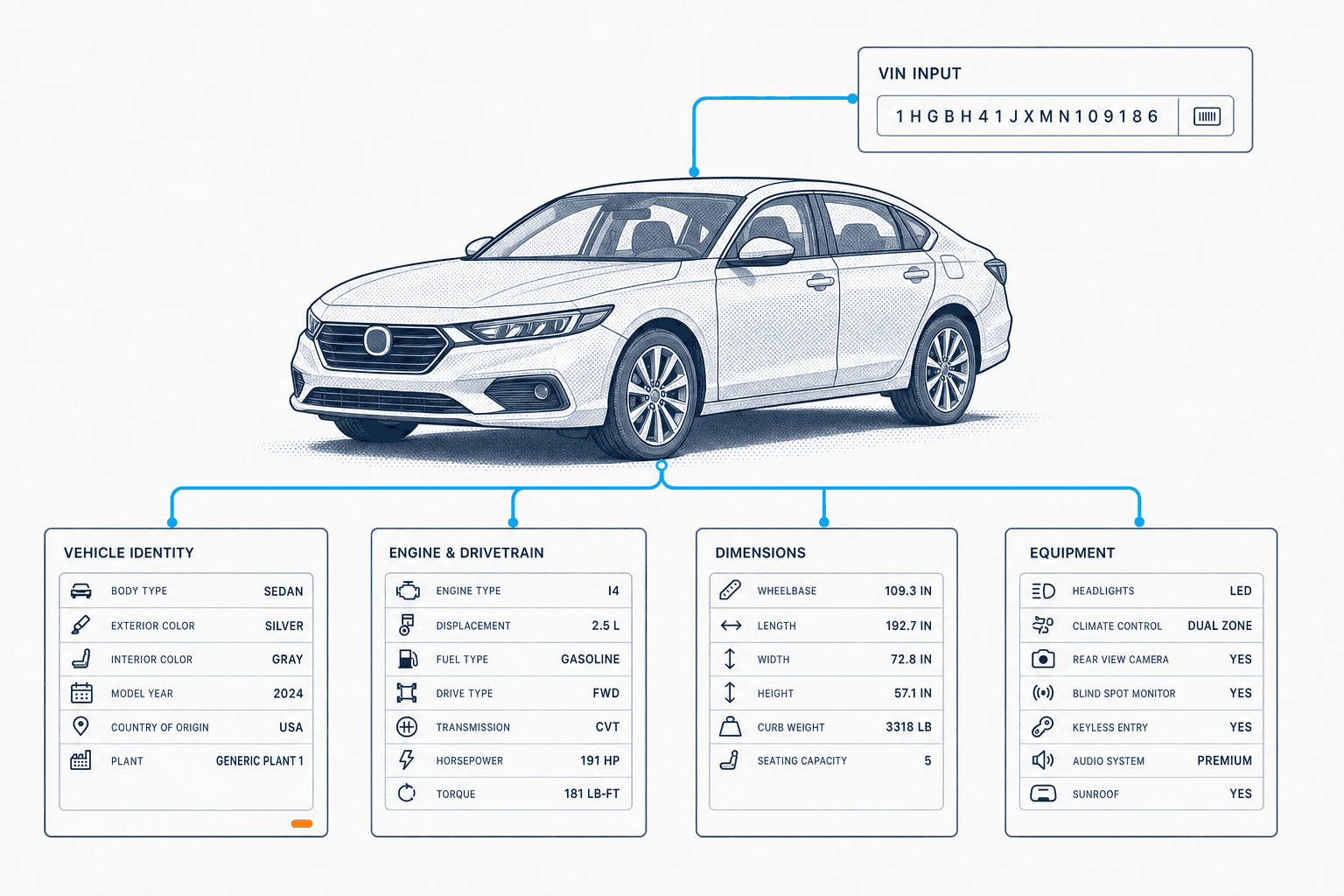
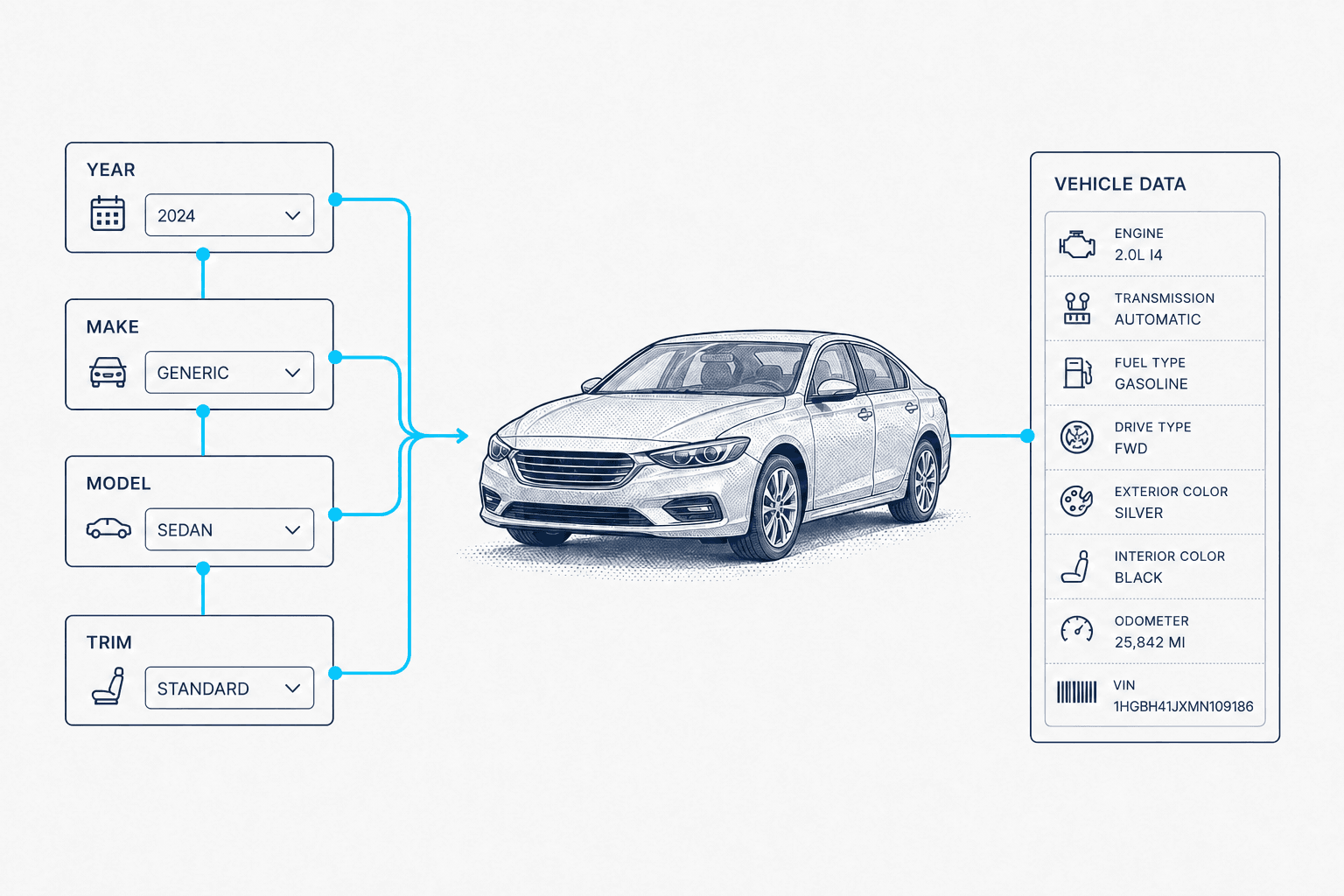
Recalls and Vehicle History carry most of a coverage decision.
Security and compliance
Enterprise-grade security
Vehicle data is handled to the standards your compliance team expects.
- SOC 2 Type II
- Certified
- GDPR
- Ready
- ISO 27001
- In progress
- 256-bit SSL
- Encryption
FAQ
Frequently asked questions
Not answered here? Contact us and we'll point you at the right endpoint.
More industries
The same platform, nine industries
CarsXE across the automotive ecosystem
Dealership
Build recall, equity and trade-in tools on licensed vehicle data.
Insurance
Quote, underwrite and settle claims on verified vehicle data.
Rental
Identify, ground and resell rental vehicles from one record.
Finance
Check liens, title and collateral value before you fund a loan.
Repair
Decode trouble codes and confirm fitment before the car is on the lift.
Auto tech startup
Ship vehicle features without building a data pipeline first.
Fleet management
Vehicle records for every VIN in a fleet, without telematics.
Parking and valet
Identify vehicles at gates, valet stands, and parking apps.
Get started
Start building today
Test drive the CarsXE platform. Sign up with your work email and start on the free sandbox. No credit card required.